

Air-cooled Capacitor or water-cooled capacitor?
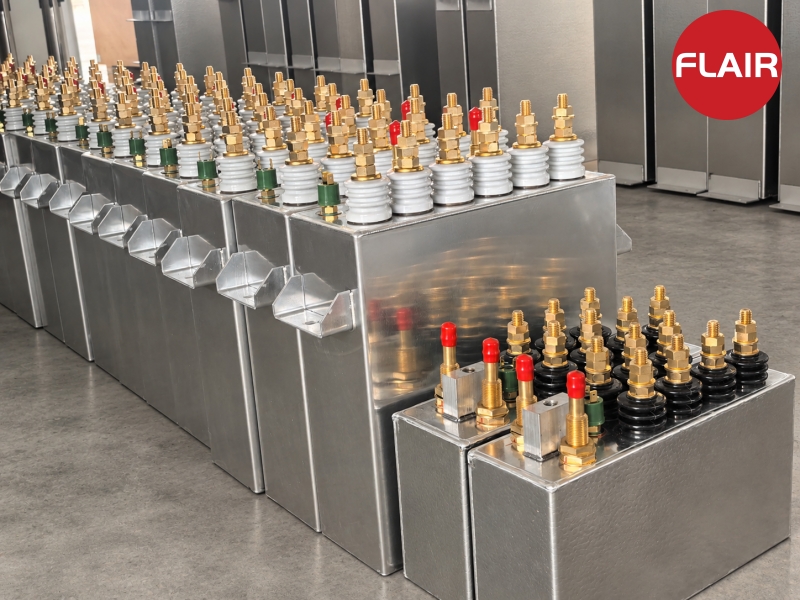
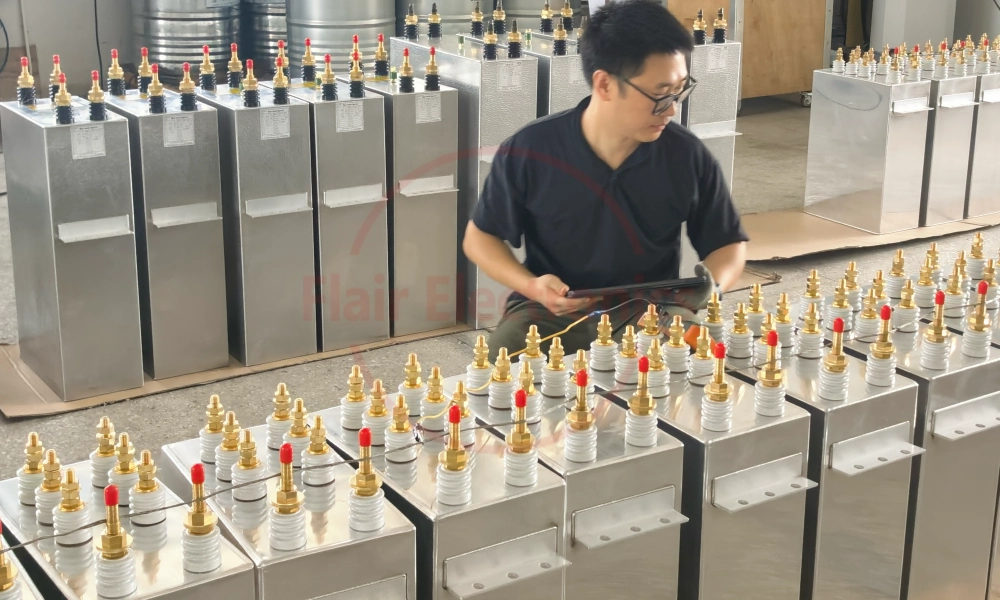
We classified the power capacitor by its construction, Water-cooled capacitor featured with built-in water channels for higher heat dissipation requirements such as high power high frequency continuous smelting operating conditions, while In low-load or intermittent operation scenarios, ordinary air-cooled capacitors can meet the basic requirements and have a relatively low initial investment. Both water-cooled capacitor and air-cooled capacitors are adopted by BOPP film as dielectric medium and non-PCB insulation impregnant. Therefore, choosing an air-cooled or water-cooled capacitor basically depends on the operating load of the equipment, the working frequency and the on-site heat dissipation conditions.
In Brief,
⭐️ Under continuous smelting conditions of high intensity and high load, a water-cooled capacitor is the best option. It is the best solution for high-power equipment, heavy thermal loads, such as induction heating, melting furnaces, and high-frequency welding etc.
⭐ Under low-load or intermittent operation conditions, an air-cooled capacitor is the best option. It is best for low-to-medium power applications with accessible ambient air or forced-air fan cooling.
I Comparison of core performance between air-cooled and water-cooled capacitors
- 1.Heat dissipation and high-temperature adaptability
Water-cooled capacitors adopt a water cooling system, which can quickly remove the heat generated during operation, helping the induction heating equipment maintain stable operation in high-temperature environments. In contrast, air-cooled capacitors mainly rely on air for heat dissipation. Under conditions of continuous high load and high frequency, their heat dissipation efficiency may be limited, and they face a higher risk of overheating during long-term operation.
- 2.Power capacity and operational stability
Due to the differences in heat dissipation conditions, water-cooled capacitors usually have a relatively high power handling capacity. Under the same operating conditions, water-cooling design helps handle larger currents, thereby reducing the probability of equipment damage caused by overload. When dealing with extreme current fluctuations, the operational stability of ordinary capacitors may be subject to certain limitations.
- 3.Maintenance cycle and comprehensive cost assessment
Water-cooled capacitors, with their superior heat dissipation performance and operational stability, usually have an advantage in terms of service life under harsh working conditions, which helps to reduce maintenance costs caused by frequent replacements. Although its initial investment is relatively high, in high-intensity industrial applications, the long-term comprehensive cost-effectiveness is quite obvious. The initial investment in air-cooled capacitors is relatively low, but in harsh environments, the maintenance frequency may need to be increased, thereby incurring certain hidden costs.
II Selection strategy based on working conditions
There is no single standard answer for the selection of capacitors for medium-frequency induction furnaces. It is necessary to make a reasonable assessment based on the actual usage situation. For metal smelting and casting workshops that are frequently used and operate at high loads, water cooling solutions are usually a more reliable choice.
In addition, while paying attention to the cooling method, the structure and material of the capacitor itself are equally crucial. In complex power consumption scenarios such as metallurgy and heat treatment, choosing the appropriate power quality products can help enhance the reliability of the overall system. For instance, the electric heating capacitors and related treatment equipment provided by Cook Cooper Electric can be customized and adapted according to the on-site working conditions, load fluctuations and power distribution structure, which helps ensure the long-term stable operation of the products in complex environments.
III Selection considerations
When selecting capacitors for induction heating equipment, we recommend comprehensively considering the on-site induction machine system voltage, major harmonic conditions, power factor changes, and specific heat treatment goals. Whether choosing water-cooled or air-cooled capacitors, an assessment should be made in combination with the budget, delivery cycle and after-sales support terms of the project. Through scientific parameter configuration and customized solutions, the heating and power quality management requirements of industrial sites can be better met.
If you are interested in more details of our electrothermal capacitors.
Please click here: