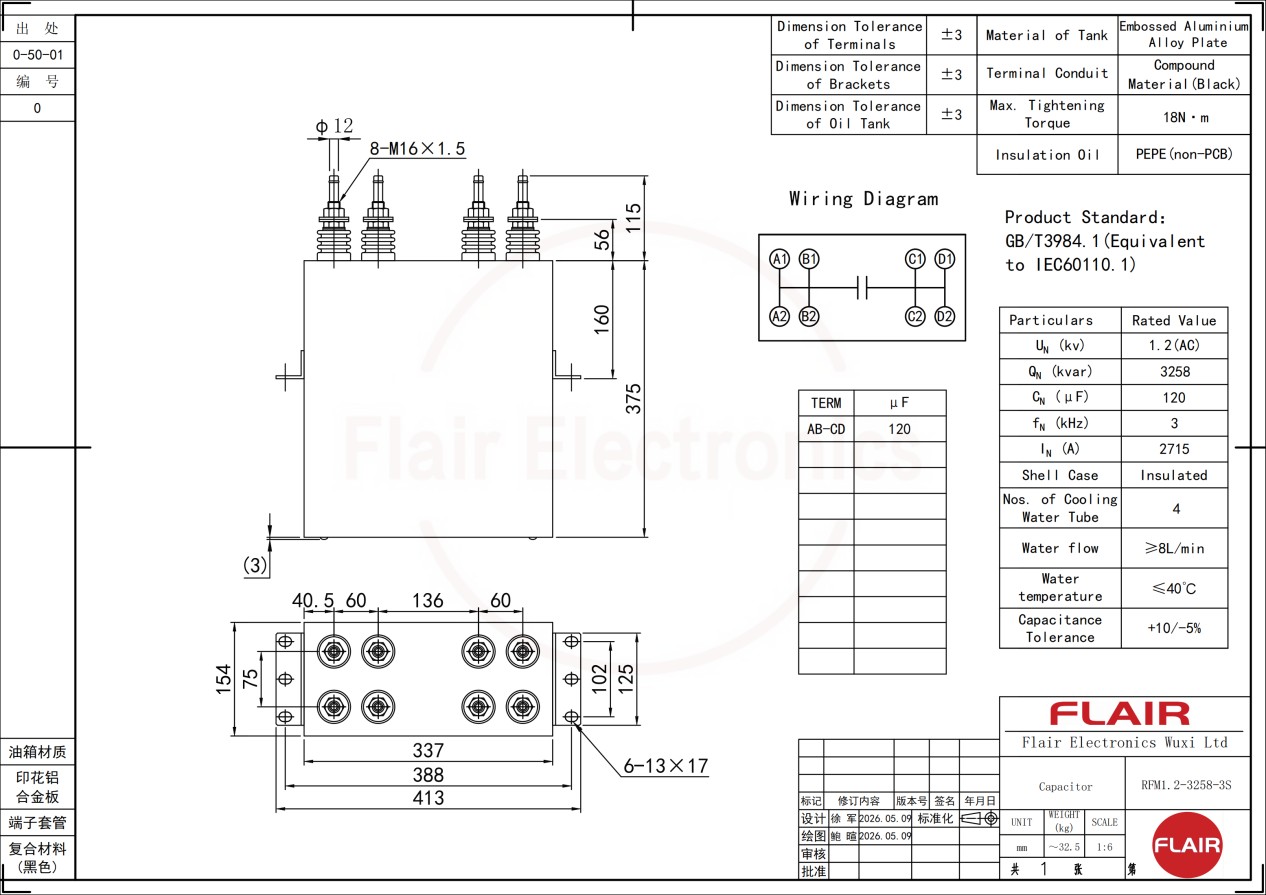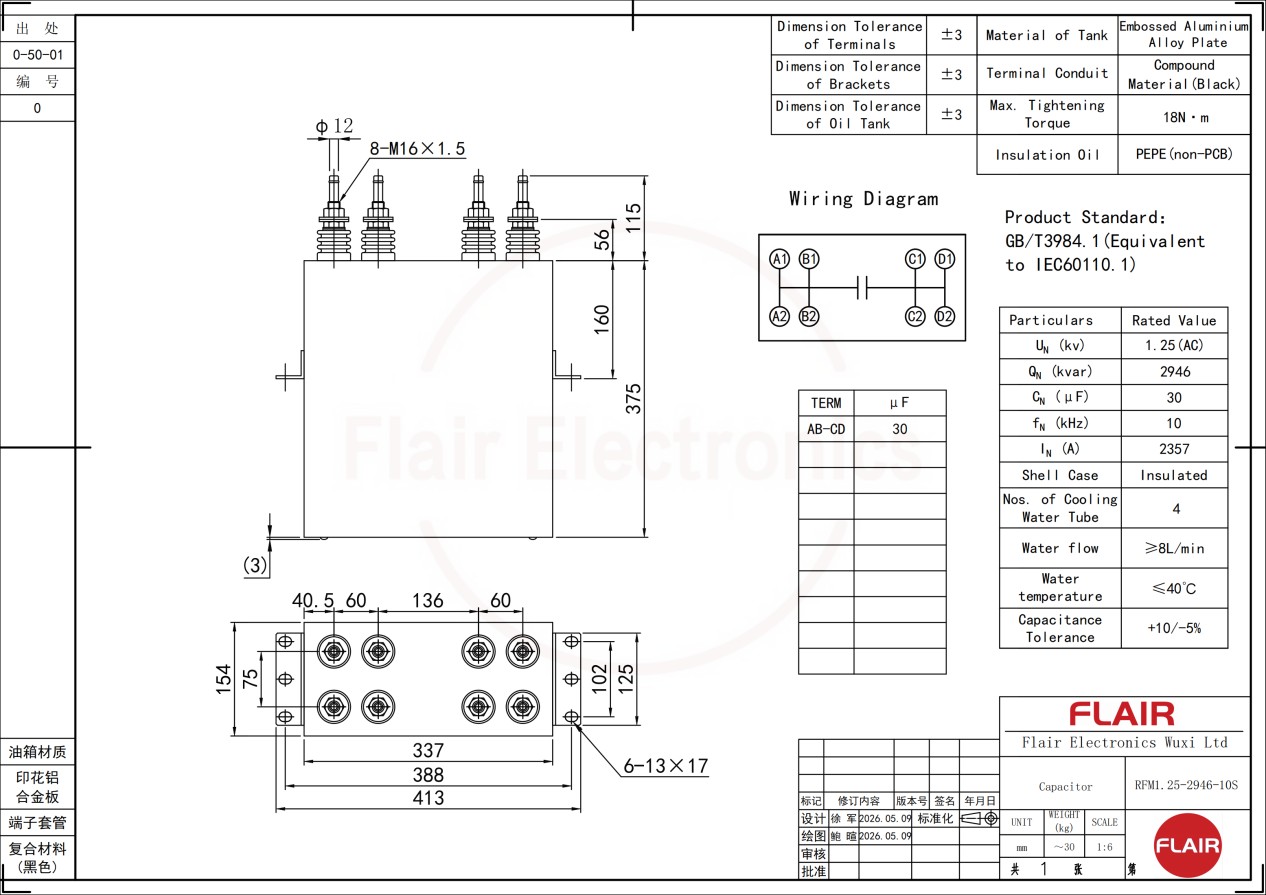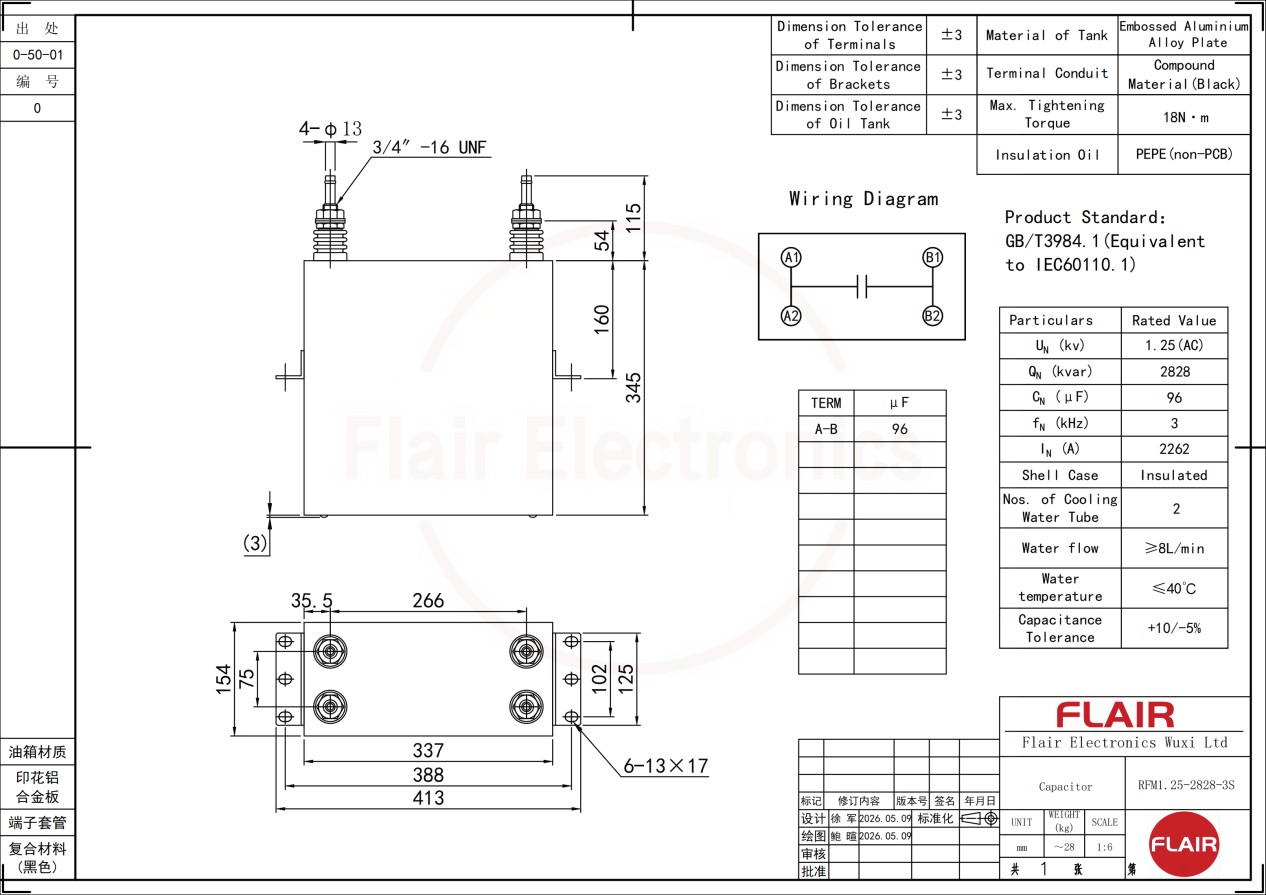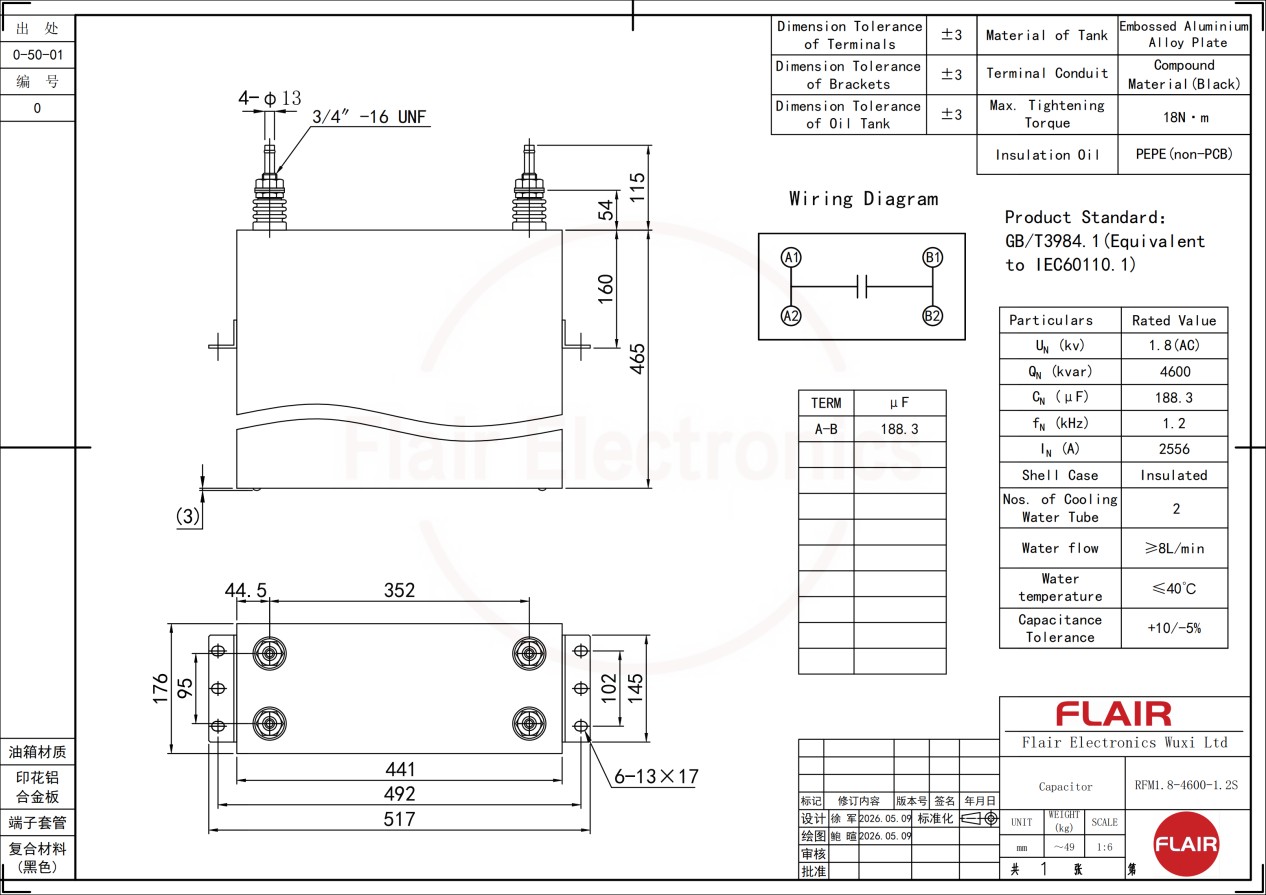


Power Capacitor and Exclusive Solutions FAQs
-
Q&A
What types of applications do Flair Support?
Flair’s Capacitors support application for reactive power compensation/power factor correction in induction heating, substations, windpower/ PV power plant. etc
-
Q&A
What is Flair Electronics’s mission?
Flair Electronics’s mission is to provide with honest and productive capacitor solutions that add real values to customers in electronics industry.
-
Q&A
What are the benefit of using water-cooled capacitor?
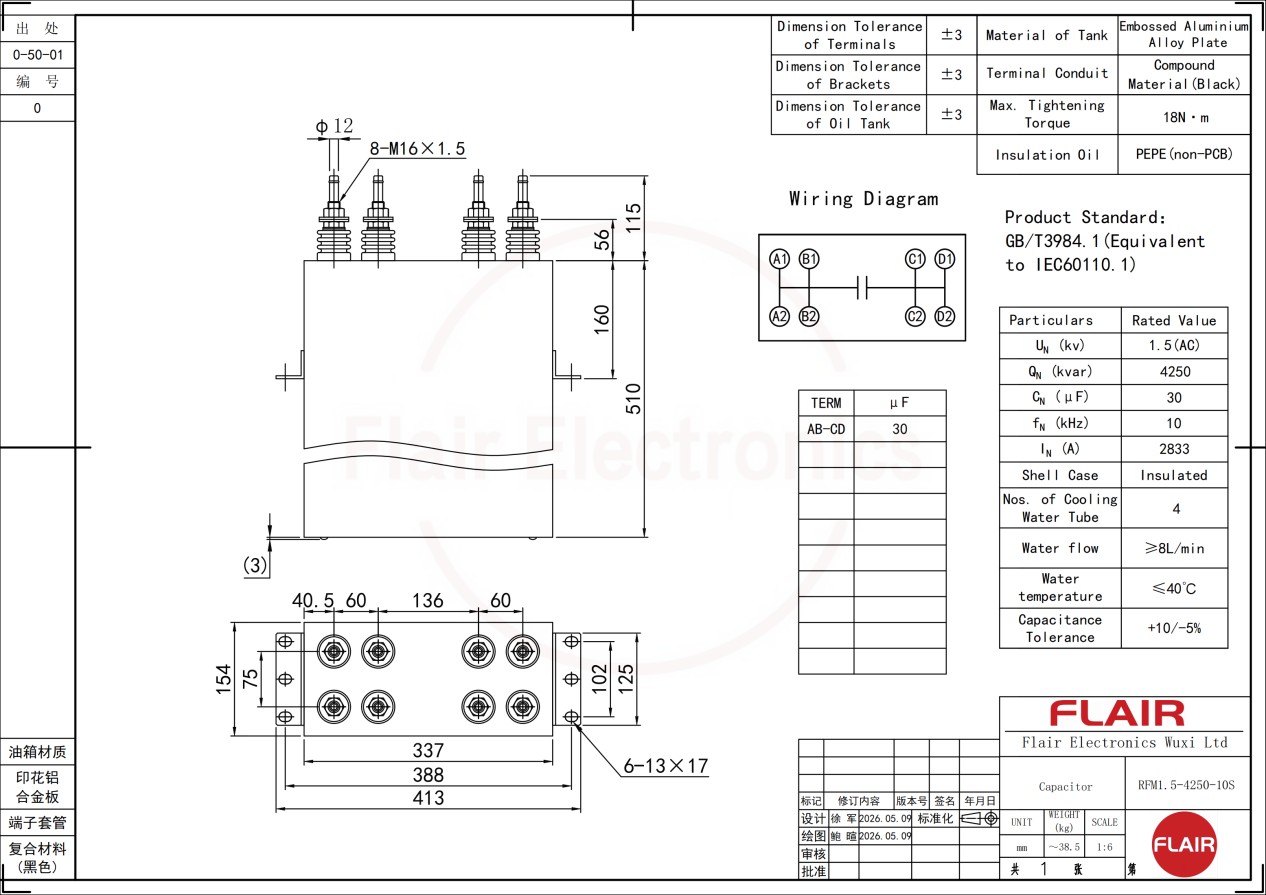
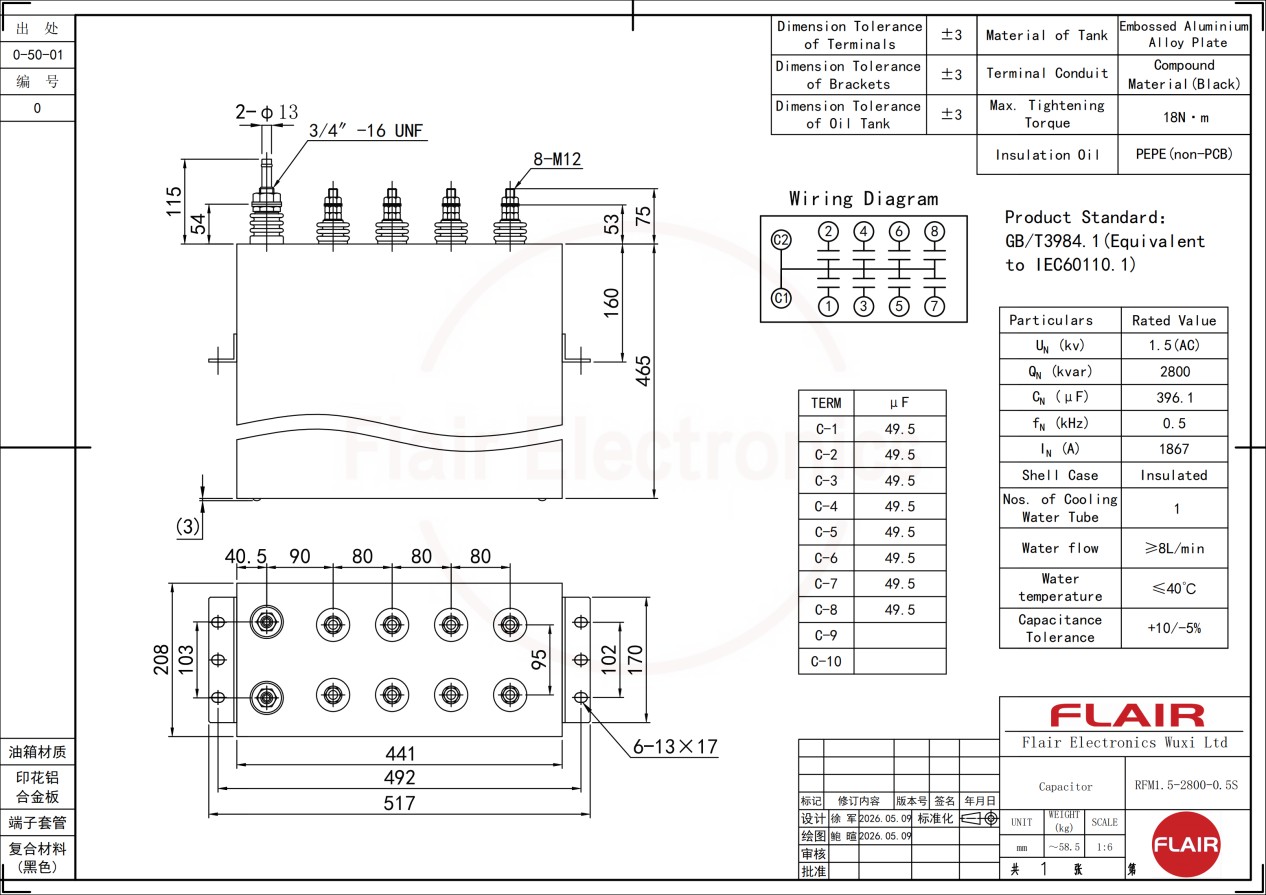
Water-cooled capacitor are beneficial for induction heating applications as they help to save cost on capacitor banks, especially in high frequency and medium frequency heat treating operations.
-
Q&A
Where can I find more information about Flair Electronics Products?
More information about Flair Electronics' products can be found on the website under the 'Products' section at Products.
-
Q&A
Does Flair Electronics offer custom design capacitors?
Yes, Flair Electronics offers custom design services for capacitors tailored to meet specific application requirements.
-
Q&A
What is the focus of the Flair Electronics’ product development?
Flair Electronics focuses on developing high-quality capacitors for induction heating and power system, emphasizing innovative designs and solutions for complex industrial needs. Maximizing the efficiency of all-film high-voltage capacitor; Exploring new technologies for capacitors.
-
Q&A
How can I contact Flair Electronics for inquiries?
You can contact Flair Electronics via email at flair@flairelec.com or by phone at +86 18168388088.
-
Q&A
What industries does Flair Electronics serve?
Flair Electronics serves industries that require power capacitors for induction heating, melting applications, power factor correction, and reactive power compensation in power system, like substation.
-
Q&A
What types of capacitor does Flair Electronics manufacture?
Flair Electronics manufactures a variety of capacitors including AC water-cooled capacitors, DC water-cooled capacitors, power capacitors for power quality(power factor correction and reactive power compensation), surge protection capacitor, pulsed power capacitor and custom-designed capacitors for specific applications.
-
Q&A
Lead Time of Flair Capacitors
4 weeks
-
Q&A
What is production capacity of Flair Electronics?
Around 1000 pieces capacitor units per month
-
Q&A
Where can I find more cases about water-cooled capacitors?
More information about Flair water-cooled type power capacitor can be found on the website under the 'Flair Solutions' section at: Flair Solutions
-
Q&A
How to select optimal capacitor banks solution for your induction heating circuit?
-
Q&A
How to quickly detect water-cooled capacitor faults?
Troubleshooting 6 Major water-cooled power capacitor Faults for induction heating furnace:Guide to Troubleshooting Major MF Power Capacitor Faults This general guide will help you quickly pinpoint the 6 most common Power Capacitor faults and provide actionable repair methods. Even beginners can follow along and step away from blind troubleshooting!
-
Q&A
Why choose Flair Electronics Capacitor?
Short-lead time of Medium frequency Capacitors We having been deeply involved in Power Capacitor manufacturing for many years and participated in countless real-world cases, So everything is very mature that we capable of guarantee exceptionally short lead times and rapid dispatch.
-
Q&A
How to choose Power capacitor for induction heating installations
Power Capacitors work in Induction Heating Machine mainly in types of water-cooled capacitors, air-cooled capacitors, super-high frequency type;
Common Buying Questions
-
Q&A
What is the frequency formula of Induction Heating?
The approximate resonant frequency of an LC circuit can be expressed as:
Frequency(Fn) = 1 / (2π√LC)
●Fn = resonant frequency
●L = inductance of the induction coil
●C = effective capacitance of the capacitor bank -
Q&A
What is the important characteristic of induction heating capacitors?
At a given capacitance and voltage, increasing the operating frequency increases capacitor current and reactive power. This is one of the reasons why a capacitor designed for 50/60 Hz power-factor correction cannot simply be substituted for a capacitor intended for medium-frequency induction heating. The electrical and thermal design requirements must be specially designed for induction heating applications.
-
Q&A
Why Water Cooling capacitor Is Used in induction heating equipment?
The high current flowing through an induction heating capacitor produces internal losses. These losses appear as heat. If the heat cannot be removed effectively, the internal temperature of the capacitor increases. Excessive temperature can accelerate:
●dielectric aging
●Film degradation
●insulation deterioration
●connection damage
●capacitance fading
●premature capacitor failure
For high-power induction heating applications, water cooling provides an efficient method of removing heat directly from the capacitor structure.
A water-cooled capacitor is therefore not simply a capacitor with a water connection. Its design must consider the interaction between: Electrical performance + thermal performance + mechanical construction + cooling system.
The water-cooling system should be designed according to the capacitor's actual losses, water temperature, water flow rate, pressure, and permissible temperature rise. -
Q&A
What is the capacitor ESR?
ESR represents the effective resistance of the capacitor in series with its capacitance.
It includes losses associated with:
●capacitor film and electrodes
●internal current paths
●terminals and connections
●conductive materials
●dielectric losses
●other internal resistive effects -
Q&A
What is the ESL?
A real capacitor also has inductance. This inductive component is commonly represented as ESL (Equivalent Series Inductance). As frequency increases, the influence of inductance becomes greater.
ESL originates from:
●internal electrode structures
●current paths inside the capacitor
●terminal geometry
●connecting conductors
●busbars
●external wiring and layout -
Q&A
what matters when select capacitor for induction heating equipment?
Parameter
Why It Matters?
Capacitance
Determines the resonant circuit characteristics
Rated Voltage
Determines permissible electrical stress
Operating Frequency
Determines frequency-related losses and reactance
RMS Current
Determines current-carrying and thermal requirements
ESR
Directly affects resistive losses
ESL / Stray Inductance
Influences high-frequency behavior and circuit resonance
Cooling Method
Determines heat removal capability
Water Flow
Important for water-cooled capacitor thermal performance
Temperature Rise
Indicates thermal operating margin
Dielectric Design
Influences reliability and service life
Terminal Design
Influences current distribution and connection losses
-
Q&A
What is induction heating capacitor banks?
In practical induction heating equipment, capacitor banks may use carefully designed series-parallel configurations to achieve the expected reactive power, voltage, capacitance, RMS current, physical installation arrangement.
-
Q&A
What is Important information for designing industrial furnace capacitor?
●furnace rated power
●operating frequency
●inverter output voltage
●resonant circuit voltage
●capacitor current
●required reactive power
●induction coil inductance
●existing capacitor capacitance
●capacitor connection configuration
●cooling water conditions -
Q&A
What is Series and Parallel Capacitor Connections and why?
A single capacitor may not provide the expected reactive power or required voltage, capacitance, or current capability for a high-power induction heating system or substation. Multiple capacitors can therefore be connected in series and/or parallel to meet the expected demand.
Parallel Connection: Parallel capacitors increase the total capacitance:
Ctotal = C₁ + C₂ + ... + Cn
Parallel connection can also increase the overall current capability when the current is appropriately distributed among the individual capacitors.
Series Connection: For capacitors connected in series:
1/Ctotal = 1/C₁ + 1/C₂ + ... + 1/Cn
Series connection increases the voltage capability of the capacitor assembly while reducing the equivalent capacitance. -
Q&A
How to calculate the Reactive Power and Capacitor Current?
The reactive power associated with a capacitor can be approximated by:
Q = V² × 2πfC
●Q = reactive power
●V = RMS voltage
●f = operating frequency
●C = capacitance
The capacitor RMS current can be approximated by:
I = V × 2πfC -
Q&A
What is the important characteristic of induction heating capacitors?
At a given capacitance and voltage, increasing the operating frequency increases capacitor current and reactive power. This is one of the reasons why a capacitor designed for 50/60 Hz power-factor correction cannot simply be substituted for a capacitor intended for medium-frequency induction heating.
-
Q&A
Need Help Selecting an Induction Heating Capacitor?
For a new induction furnace or capacitor replacement project, providing the following information can help determine a suitable capacitor configuration:
Furnace Power | Operating Frequency | Capacitor Voltage | Required kVAr | Existing Capacitance | Capacitor Current | Coil Inductance | Cooling Water Conditions
Based on these parameters, the required capacitance, capacitor quantity, series/parallel configuration, rated current, and cooling requirements can be evaluated.
Flair Electronics supplies water-cooled capacitors for medium-frequency induction heating, induction melting, heat treatment, and other high-current resonant applications. Contact our technical team for capacitor selection and application support.